Argentina
Our country has a vast territory, the second largest in South America and the eighth largest in the world. Blessed with natural wealth and extraordinarily diverse landscapes, it boasts mountains and plains, lush vegetation and extreme deserts, forests and steppes, glaciers and waterfalls. These conditions create a plurality of terroirs that host different wine styles. Agriculture has always been an important part of Argentine culture, and viticulture is one of its most successful activities. The quality of our wines, like the ones of the rest of the New World countries, has recently been acknowledged. However, Argentina's style could also be considered an extension of the Old World: we are heirs to the viticultural wisdom of the European producers who emigrated to our lands. We cannot be classified as ancient or modern; we are something more, a paradox with a rich and complex nature.
Cultivated area: 247,847 ha.
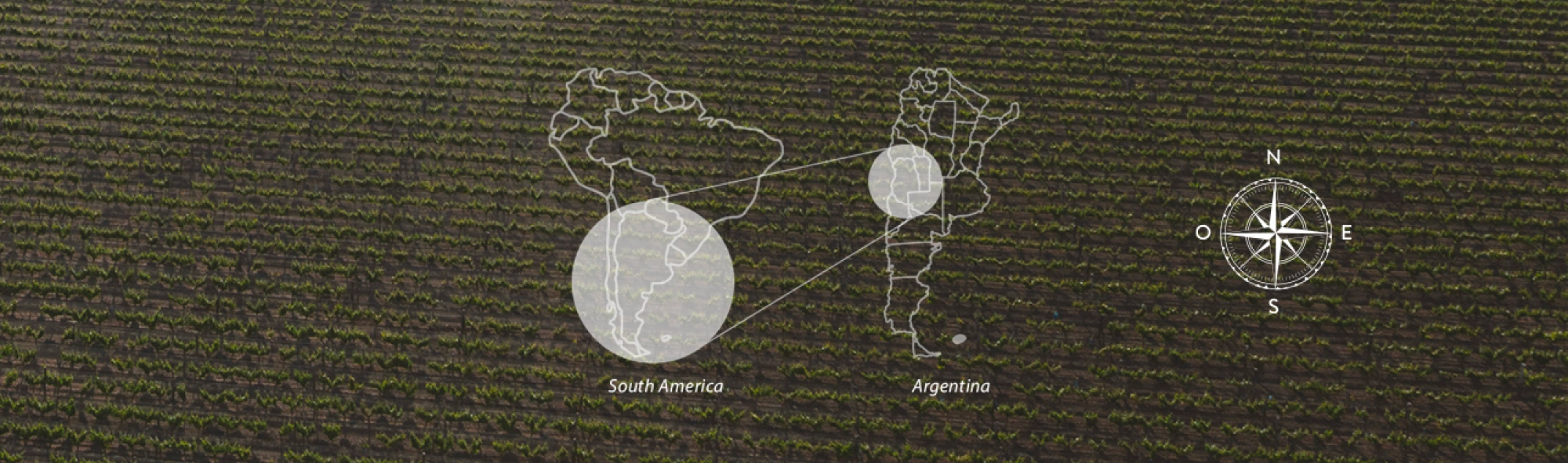
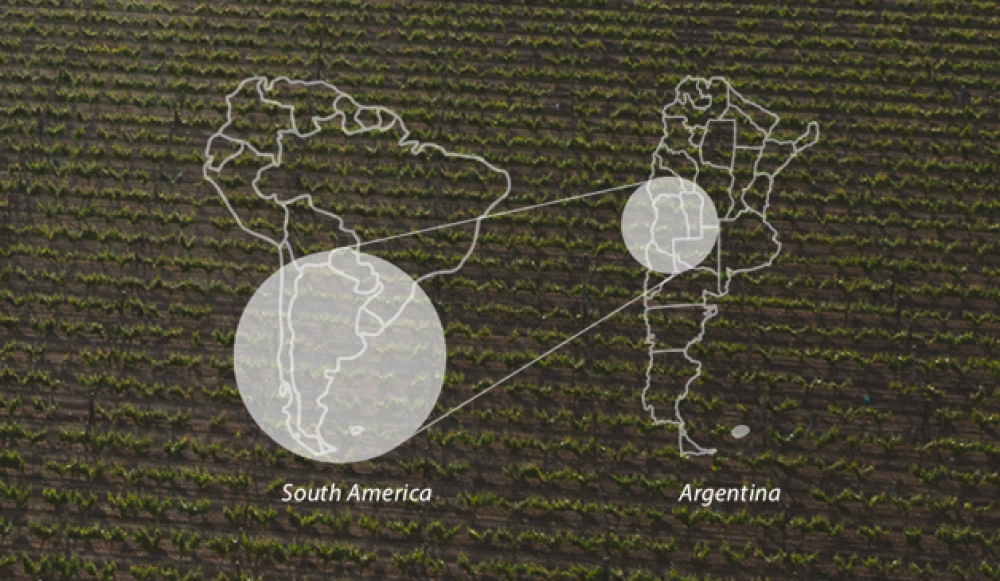

Mendoza
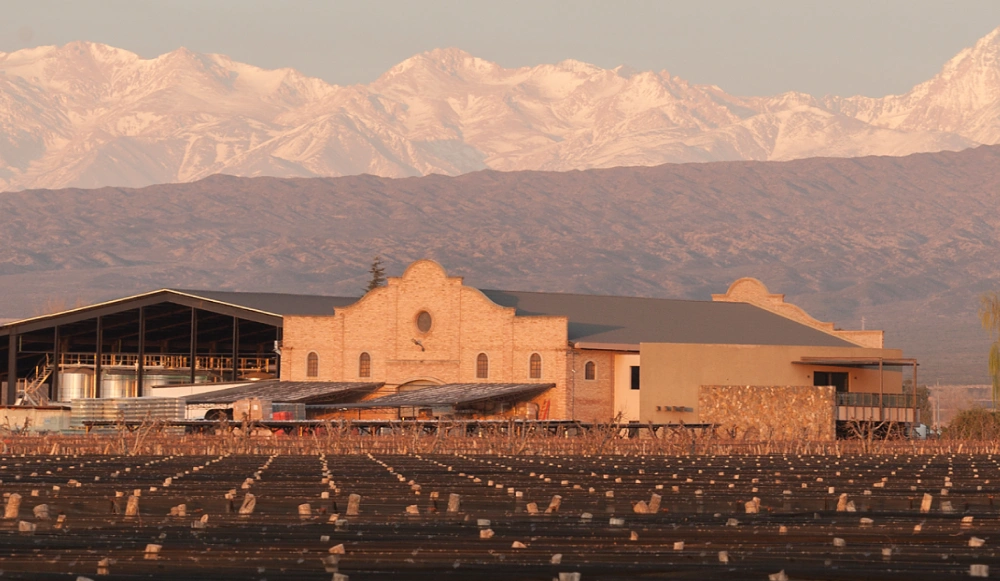
It is Argentina's most important wine-growing region, representing 71% of the country's wine production. Located in the eastern foothills of the Andes Mountains range, at the shade of the Aconcagua mountain (6,961 m above sea level), the vineyards are planted at some of the highest altitudes in the world, with an average area between 600 and 1,200 meters (2,000 and 3,600 feet) above sea level. The altitude creates marked thermal amplitudes, allowing us to produce highly concentrated grapes. These grapes have plenty of sunlight exposure and ripen slowly, making possible to achieve colorful wines with great structure and good tannins, a foundation for creating complex wines with significant ripening potential. The Andes Mountains range naturally protect our valleys from the humid Pacific winds, creating a dry climate that makes additional phytosanitary care for our grapes unnecessary. The average annual rainfall is only 230 mm, which is why winemaking is possible thanks to irrigation with the purest snowmelt water from the Andes. Cultivated area: 175,971 ha.
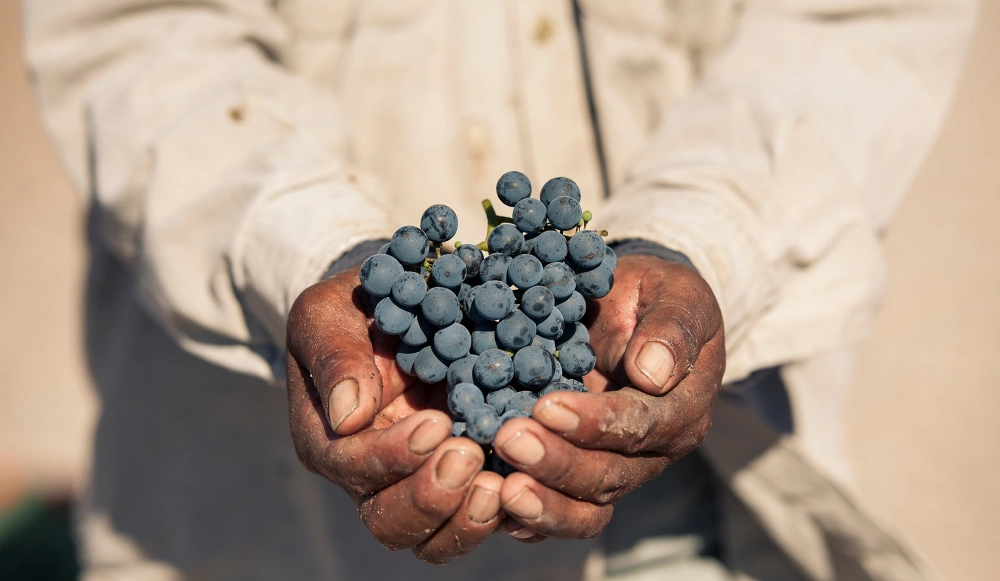
Luján de Cuyo
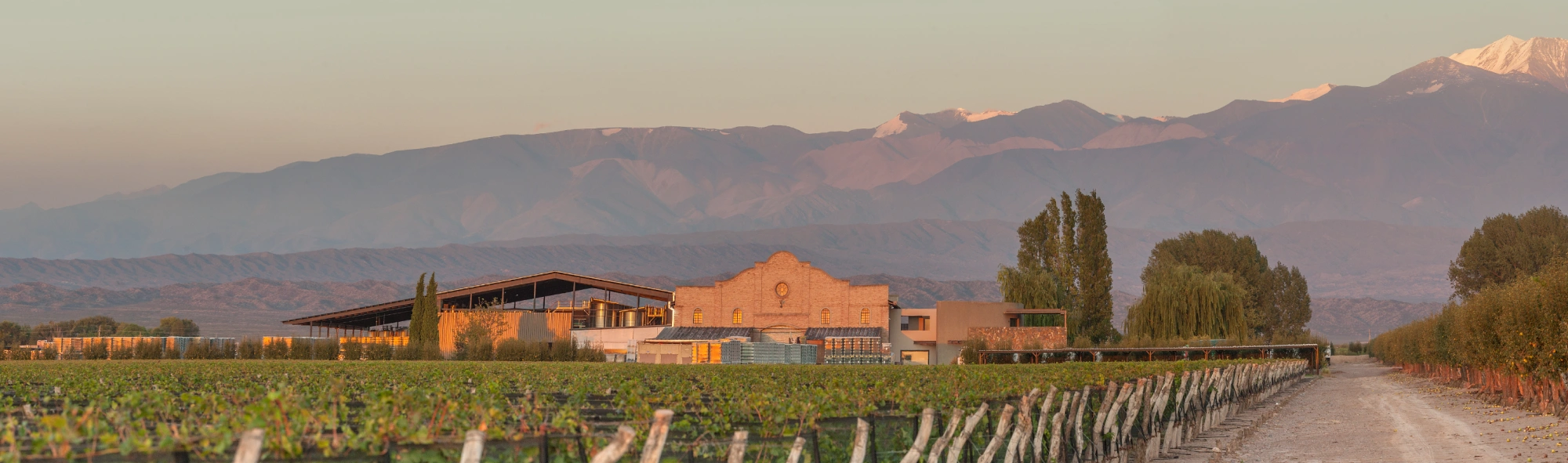
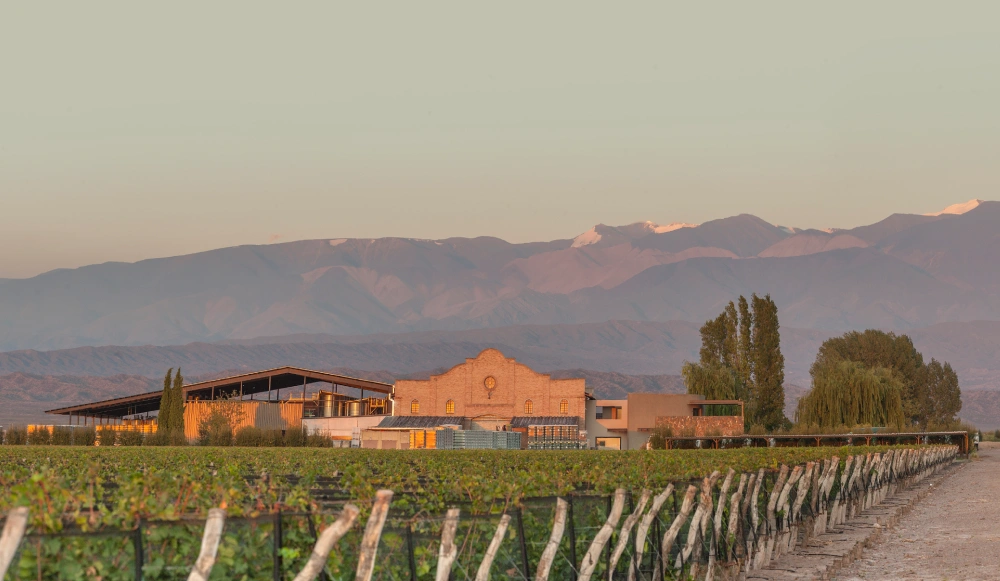
Our winery is located in Agrelo, a micro-region at the foothills of the Andes and one of the most renowned areas within Luján de Cuyo. The vineyards are planted at 1,030 meters above sea level. Sunlight exposure is exceptional, and the wide thermal amplitude—warm days followed by cool nights—allows the grapes to develop remarkable tannin concentration, providing wines with excellent structure.
The soils are alluvial, ranging from sandy to clayey, with medium depth and supported by a gravelly sublayer. We have 100 hectares cultivated under vine, with yields between 70 and 100 quintals per hectare.
Our main water source is underground, supplied by three wells located at the highest point of the property. These wells reach depths of nearly 200 meters, with static water levels around 150 meters and an average extraction capacity of 180,000 liters per hour.
The vineyards are drip-irrigated through a solar-powered system, located every 2.5 meters along the rows, spaced 0.7 meters apart, delivering a nominal flow of 2 l/h. The system is programmed to apply a daily 6 mm of water, ensuring balanced vines and precise control of vegetative growth.

«Our history is linked to the European immigrants who left their mark forever in these latitudes, especially in viticulture. When our father, Don Juan Muñoz, arrived in Mendoza to develop the cultivation of vines, a group of partridges accompanied him in his daily work, that is the reason for the name that identifies us.»
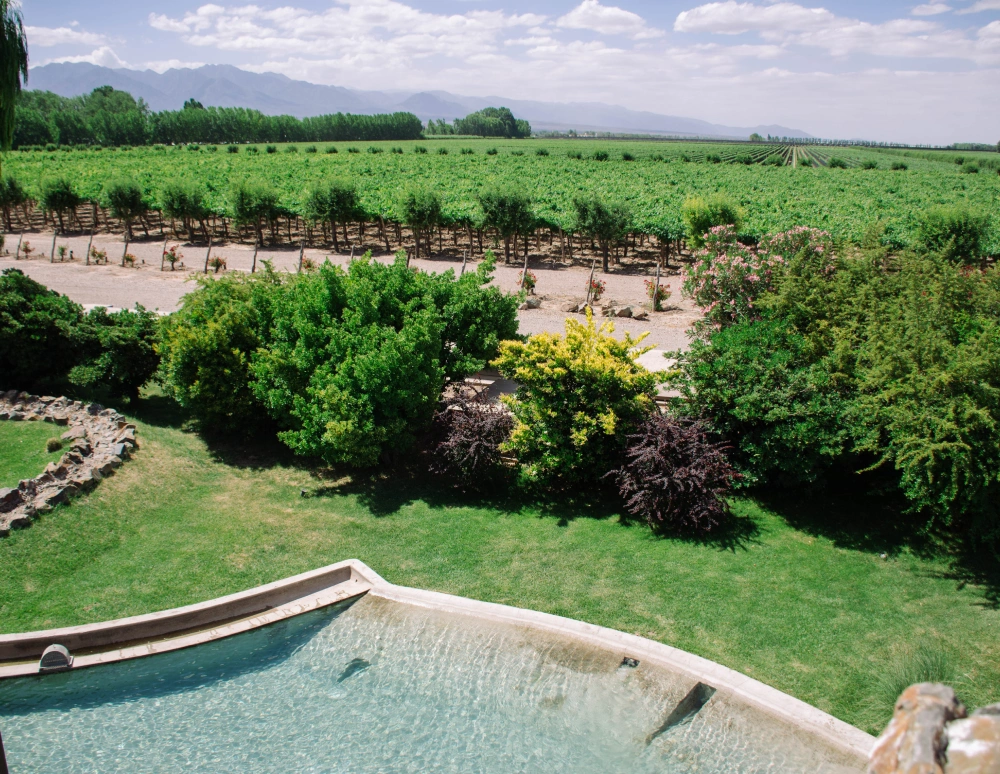
«In 2004, my brother Nicolás and I decided to go further and build a winery to make our own high-quality wines, emphasizing innovation. In April of that year, we founded Viña Las Perdices in the heart of our vineyards in Agrelo, where we grew up and learned to make wine for as long as we can remember.»

«We, like partridges, do not migrate; we choose a habitat and make it our home through hard work. Everything we learned during a lifetime in the vineyard ends up in the wines we make and in those who drink them, sharing part of our history.»
Juan Carlos Muñoz


Technology
We have successfully carried out a significant modernization process aligned with the standards of contemporary winemaking. Our current production capacity reaches 3,500,000 liters, distributed across 100 stainless steel tanks of various sizes: 840, 600, 400, 250, 120, 80, 60, 50, and 30 hl. These tanks optimize processes and allow for strategic product allocation. Some are equipped with an automatic pump-over system through air injection (Air Mixing), which enables automated pump-overs, oxygen injection for both macro- and micro-oxygenation, and programmed temperature control.
We have a dedicated area exclusively for sparkling wine production, equipped with “autoclaves” (pressure-resistant tanks) and an isobaric bottling line. Grape pressing is carried out with a pre-cooling process, supported by auxiliary refrigeration units (reefer type) and a hot-water generator for specific production needs. To complete the process, we employ pneumatic presses, auxiliary hydraulic presses, stainless steel baskets, and conveyor belts.
Currently, the winery has 650 French and American oak barrels, with light and medium toasts, stored in a temperature-controlled area. We also implement the use of Roll Fermentor, a device mounted on rails that allows barrels to rotate on their own axis, adding wood characteristics to the wine during fermentation in a gentle, non-aggressive way for the grapes.
Finally, it is worth highlighting that the estate’s entire drip irrigation system is powered by solar energy. Together with composting initiatives and humus development projects, this approach supports our vision of sustainability, fostering a productive and environmentally friendly ecosystem based on a respectful interaction with nature.
Varieties
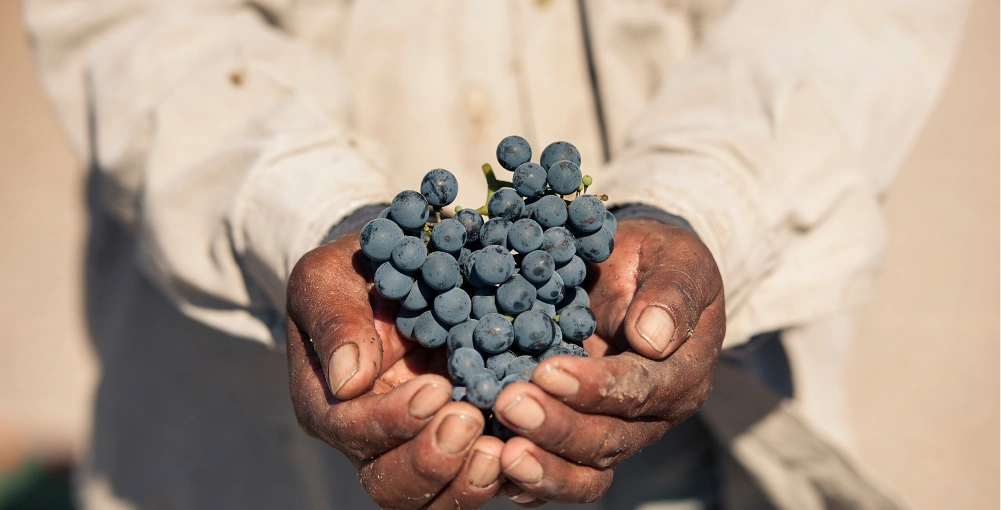
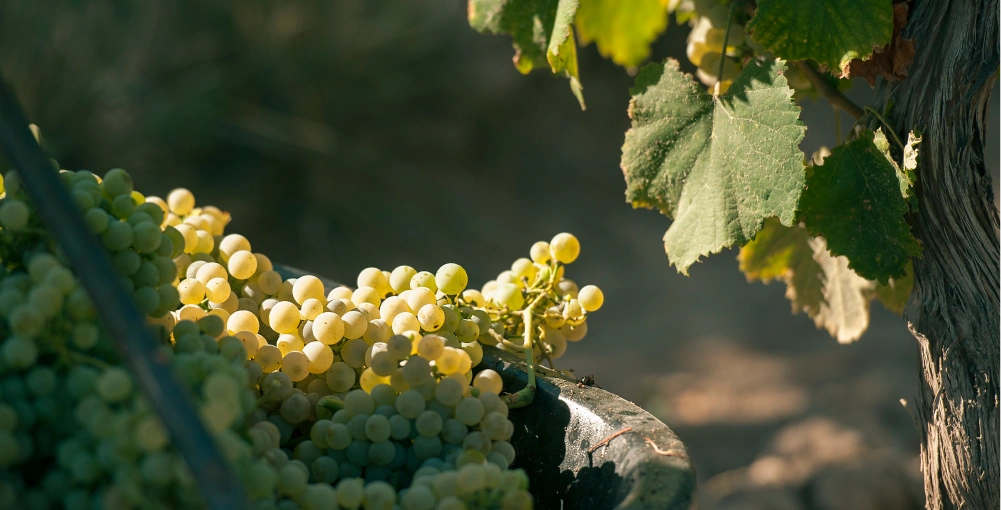
Our land has a total of 17 varieties spread across 100 hectares. The red varieties shows exceptional concentration, resulting in elegant and friendly Malbec, Merlot, Bonarda, Cabernet Franc, Cabernet Sauvignon, Petit Verdot, Pinot Noir, Ancellotta, and Tannat wines. White varieties such as Sauvignon Blanc, Viognier, Pinot Grigio, Chardonnay, Riesling, Torrontés, Albariño, and Gewurztraminer reach a good level of acidity, and their aromatic characteristics lead to delicate and elegant wines. Their concentration, structure, and body are in perfect balance with their smoothness, refinement, and elegance.

Presentation
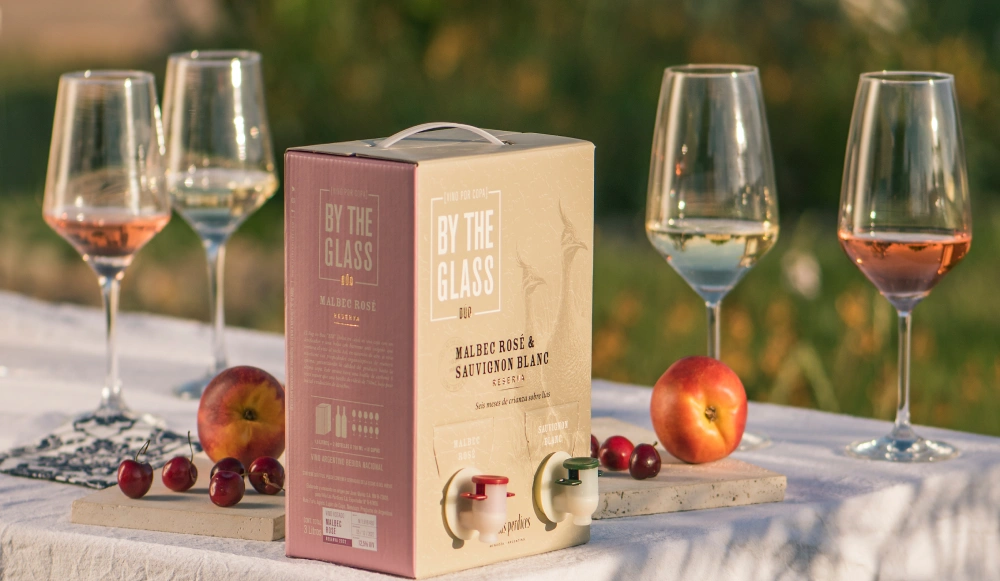
The innovation in the exploration of varieties and diverse production methods also reaches a wide range of different packagings and presentations for our fans to choose from. Our wine presentations vary from 375 ml glass bottles, through traditional 750 ml bottles and the impressive 1,500 ml Magnums, and also include much more dynamic and sustainable formats such as 269 ml cans, the first Pouch Wine in Argentina, with a 2,250 ml capacity, and the extensive By the Glass line with a 3,000 ml Bag-in-Box. The innovative Duo, which, through an exclusive design by Viña Las Perdices, offers the possibility of enjoying two different varieties in a single Bag-in-Box.